
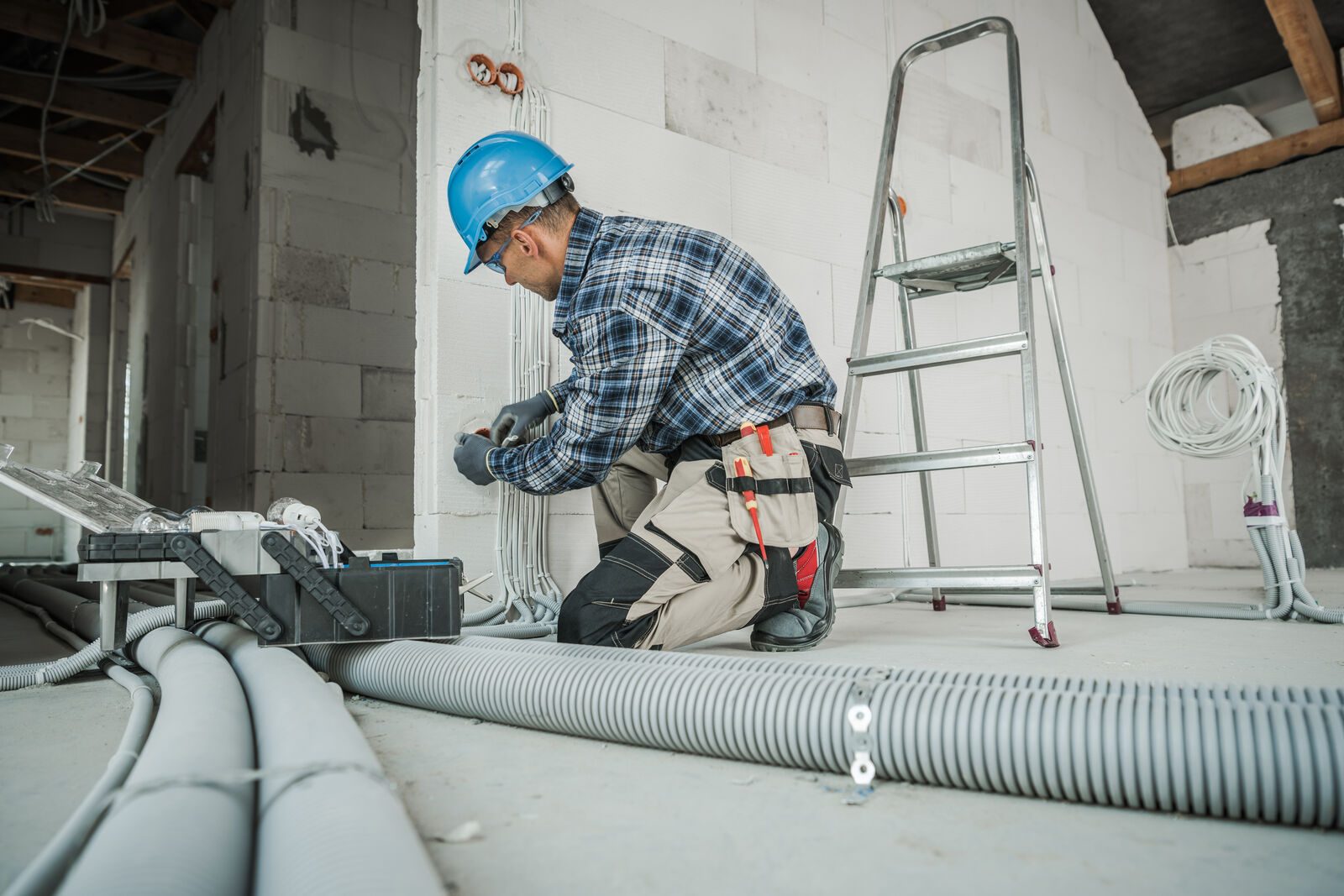
Electrical Installation & Wiring
From one extra plug point to the complete wiring of a new home, New Power Holdings plans and carries out electrical installation work across Gauteng — sized correctly, routed neatly and certified to SANS 10142-1.
Good electrical installation work is the kind you never have to think about again. Circuits sized for the loads they actually carry, cable routed where it can be found later, terminations made once and made properly. That is the whole job, and after fifteen-plus years and more than 5,000 projects, our teams treat it as non-negotiable.
New Power Holdings wires homes, complexes, offices, shops and factories throughout the province. Our Installation Electricians are registered with the Department of Employment and Labour, the company is fully insured, and nothing leaves our hands untested or undocumented.
Local knowledge counts for more than people expect, because supply rules differ between City Power, Eskom and Ekurhuleni areas — and we deal with all three daily. You can see how we work on the ground on our electrical installation in Johannesburg page, or browse every area we serve.
What Our Teams Install
If it carries current on your stand, we can wire it. The bulk of our installation diary looks like this:
- New builds. Complete wiring of new houses and complexes, from sleeving the slab to final fit-off.
- Full rewires. Replacing tired or dangerous wiring in older properties, room by room, with minimal mess.
- Extensions and renovations. New circuits, relocated points and board changes that keep your building project compliant.
- Plug points and circuits. Extra sockets where you actually use them, on correctly rated circuits instead of daisy-chained adaptors.
- Lighting circuits. New switching, dimming and circuit splits for indoor and outdoor lighting.
- Geyser connections and timers. Isolators, thermostat checks and timer wiring that trims wasted kilowatt-hours.
- Stove and oven circuits. Dedicated, correctly sized circuits with isolators within reach, as the standard requires.
- Three-phase supply. Upgrades from single-phase for workshops, machinery and larger homes with heavy loads.
- Outdoor and garden power. Weatherproof sockets, pool pumps, boreholes and gate motors, all on protected circuits.
- Inverter and backup-ready wiring. Essential-load circuits, changeover switches and tidy DB splits so load shedding hurts less.
Planning a build or renovation? Call 0861 995 088 before the walls close up — ten minutes with an installation electrician now saves days of chasing plaster later.

Residential and Commercial Electrical Installations
Homes get wired around the people living in them. We ask how you cook, where the TV wall is, which side of the bed you charge your phone, and whether a flatlet or inverter is on the five-year plan — then we position points and split circuits to match. Every socket circuit gets 30mA earth leakage protection, and geysers, stoves and pool pumps go onto their own breakers so one fault never darkens the whole house.
Older houses deserve a special mention. Plenty of Gauteng properties still run on wiring from the seventies, with perished insulation and boards full of mystery breakers. A rewire usually starts at the panel itself — our distribution board upgrades page covers that side — and ends with a fresh Certificate of Compliance, which a property transfer requires to be no older than two years. Recent examples include full rewires for installation clients in Sandton estates.
Commercial wiring runs to a different clock. Shops and restaurants cannot lose trading hours and offices cannot lose a workday, so we plan installations in phases, work after hours where needed and keep circuits live until the moment we cut over. Three-phase distribution, tenant splits and dedicated equipment circuits are everyday work for our commercial crews, including regular office and retail wiring in Pretoria.
Paperwork matters as much as the cable. Landlords and facilities managers receive as-built circuit charts, test results and COCs filed per tenancy, which keeps OHS Act audits and insurance assessors satisfied. When a tenant moves out, you know exactly what sits behind every cover plate.
Indicative timelines for common projects
Every property differs, but these ranges hold for most of the work we quote:
| Project | Typical scope | Indicative timeline |
|---|---|---|
| New plug or light point | One point added to an existing circuit | 1–3 hours |
| Geyser connection and timer | Isolator, wiring and timer setup | Half a day |
| Home extension wiring | New circuits, DB additions, certification | 2–4 days |
| Three-bedroom house rewire | Full strip-out, rewire and new board | 3–5 days |
| New-build house wiring | First fix to fit-off and COC, staged with the builder | 2–3 weeks |
How an Installation Runs, Start to Finish
Four stages, no surprises along the way:
Walk-through and wiring plan
We measure up on site, talk through how each room gets used and agree the position of every point, switch and circuit before anything is priced.
Itemised quotation
Your written quote prices cable, fittings, board work and labour separately, so you can trim or add scope and see exactly what changes.
First fix to fit-off
We chase, sleeve and pull cable while the building is open, then return after plastering and painting to fit sockets, switches and fittings cleanly.
Test, label, hand over
Every circuit is tested, the board is labelled with a proper circuit chart, and your COC is in your hand at handover — not weeks later.
Installation Questions We Hear Most
Yes. Any circuit we add or alter is tested and certified by our registered Installation Electricians before handover. Keep the COC safe: for a property transfer it may not be older than two years.
Less than most people fear. A typical three-bedroom rewire runs three to five days. We work room by room, restore power to key circuits each evening and clean up daily.
Yes. We separate essential loads onto their own circuits and install a changeover switch with the right DB provisions, so a future inverter or solar system connects without rework.
Most homes run comfortably on single-phase. Three-phase makes sense for workshops, machinery, large ovens and properties with several heavy loads running at once. We assess your demand before recommending an upgrade.
We wire the installation to the point of supply and prepare the paperwork for City Power, Eskom or your metro. The utility makes the final connection, and we coordinate that step for you.
It depends on the cable run, the wall construction and whether the nearest circuit has spare capacity. We quote per point after a quick look at the property, and every quote is free and itemised.

Let's Get the Wiring Right
Tell us about your build, rewire or extension and an itemised quote will be back with you — usually within a working day.