
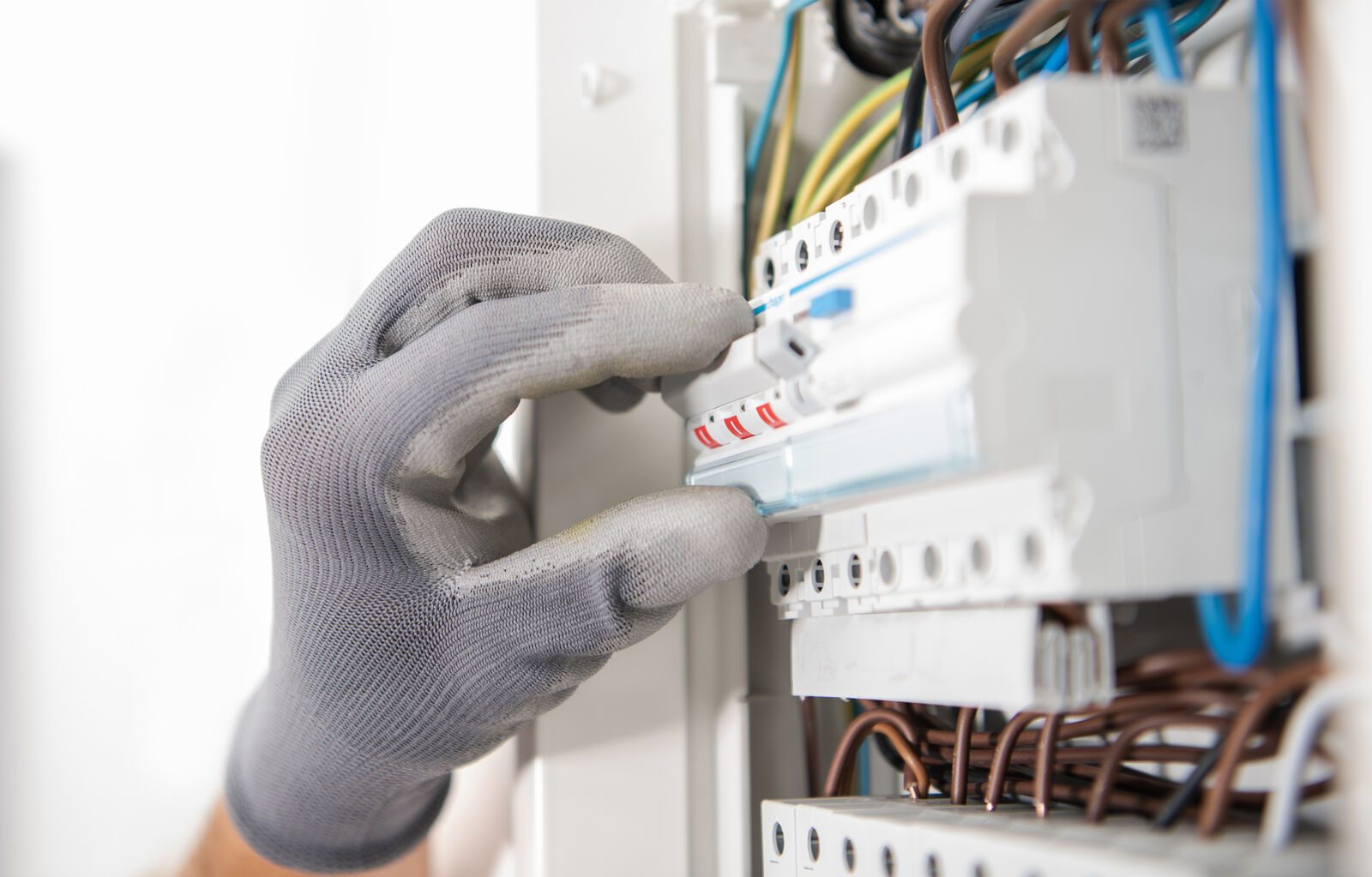
Distribution Board Upgrades
Your DB board decides how safe the rest of the property gets to be. New Power Holdings carries out distribution board upgrade work across Gauteng — modern breakers, 30mA earth leakage and surge protection, certified to SANS 10142-1.
Every circuit in your home or business starts at the distribution board, and so does most of the protection you rely on. A distribution board upgrade replaces tired fuses and obsolete breakers with modern protection that trips fast, isolates cleanly and leaves room to grow.
Plenty of Gauteng boards were assembled decades ago, long before inverters, heat pumps and double-oven kitchens. Others have simply been patched once too often. Either way, the panel is where electrical safety is won or lost, which is why it is the first thing our electricians photograph on almost any job.
Signs Your Board Is Overdue for Attention
No test instruments needed — any one of these is reason enough to have the board assessed:
- Breakers tripping under normal load. Nuisance tripping that worsens in the evenings when everything runs at once.
- A warm panel or a fishy smell. Overheating bakelite and stressed terminations have a smell you only need to learn once.
- Buzzing or crackling. The sound of loose connections arcing under load behind the cover.
- No earth leakage unit, or one that fails its test button. 30mA protection is what stands between a fault and a person.
- Ceramic fuses or discontinued breakers. When replacements no longer exist, every fault becomes a scramble.
- No space for anything new. Circuits doubled up on single breakers because the panel ran out of slots years ago.
- Nothing is labelled. If nobody knows which breaker feeds what, every job starts with twenty minutes of switching things off.
- Scorch marks or melted insulation. Evidence of a past failure that was patched rather than properly repaired.
What a Distribution Board Upgrade Involves
An upgrade is a rebuild, not a shuffle. We fit a new enclosure where the old one is too small or too tired, then build it up properly: main switch, a correctly sized breaker for every circuit, a 30mA earth leakage unit, surge protection, an earth bar with solid bonding, and a circuit chart on the door. Most domestic boards are finished in a working day, with power off in planned windows rather than from morning to night.
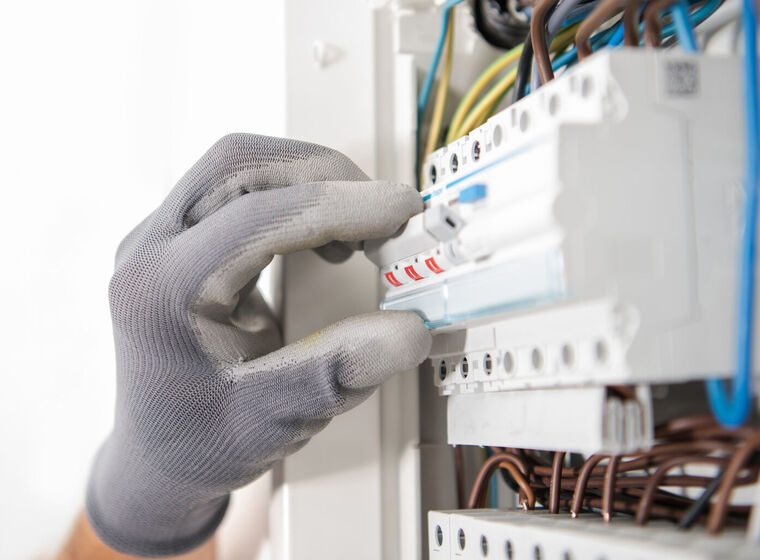
Afterwards every circuit is tested and your Certificate of Compliance is issued or updated — worth remembering that a property transfer needs one no older than two years. If testing shows the cabling behind the panel is the real problem, you will see the readings and get a straight recommendation, sometimes for rewiring work instead of a new board that flatters bad cable. Separating a cottage or flatlet at the same time? A rebuilt board pairs naturally with an STS prepaid sub-meter so the tenant's usage bills itself.
Surge Protection and the Load Shedding Effect
Load shedding does its damage on the way back. When supply returns, switching surges ride in with it, and gate motors, TVs and inverter electronics take spikes they were never designed to survive. A Type 2 surge protection device (SPD) on the board diverts those spikes to earth before they reach your equipment.
One distinction matters here: the SPD protects equipment, while the 30mA earth leakage unit protects people. They are not interchangeable, and a compliant modern board carries both. Insurers increasingly expect to see surge protection when assessing repeat damage claims, so the upgrade tends to pay for itself quietly.
Not sure what is inside your board? WhatsApp us a photo with the cover on and we will tell you what we see — or call 0861 995 088 and describe it.
Inside a compliant DB
| Component | What it does | Required by SANS 10142-1? |
|---|---|---|
| Main switch | Isolates the entire installation in one movement | Yes |
| Earth leakage unit (30mA) | Cuts the supply in milliseconds when current leaks to earth | Yes, on socket and other prescribed circuits |
| Circuit breakers | Protect each cable run against overload and short circuit | Yes, sized to the cable they protect |
| Surge protection device (SPD) | Diverts voltage spikes to earth before they reach equipment | Yes for new installations; strongly advised on upgrades |
| Earth bar and bonding | Ties every earth conductor to one solid reference point | Yes |
| Circuit chart and labelling | Shows which breaker feeds which circuit | Yes |
What People Ask Before Upgrading
Most domestic boards are rebuilt within a working day. Power goes off in planned stages rather than for the whole day, and we confirm the schedule before starting.
Yes. The upgraded board is tested circuit by circuit and covered by a Certificate of Compliance from our registered Installation Electricians.
Where the rest of the board is sound, absolutely. We carry common breaker types on the van and will never push a full upgrade that the board does not need.
It removes most of the risk, not every last bit of it. For sensitive electronics we recommend layered protection: an SPD at the board plus plug-in protection at the device.
Yes. We either extend the enclosure or fit a larger one, creating space for the inverter supply, its changeover arrangement and any future circuits.
Age alone is not illegal, but most old fuse boards cannot pass a compliance inspection: no earth leakage protection, no labelling and deteriorating insulation. That blocks a COC when you sell, so most owners upgrade before listing.

Give Every Circuit a Safer Start
Book a board assessment and an itemised upgrade quote follows, breaker by breaker — anywhere in Gauteng.